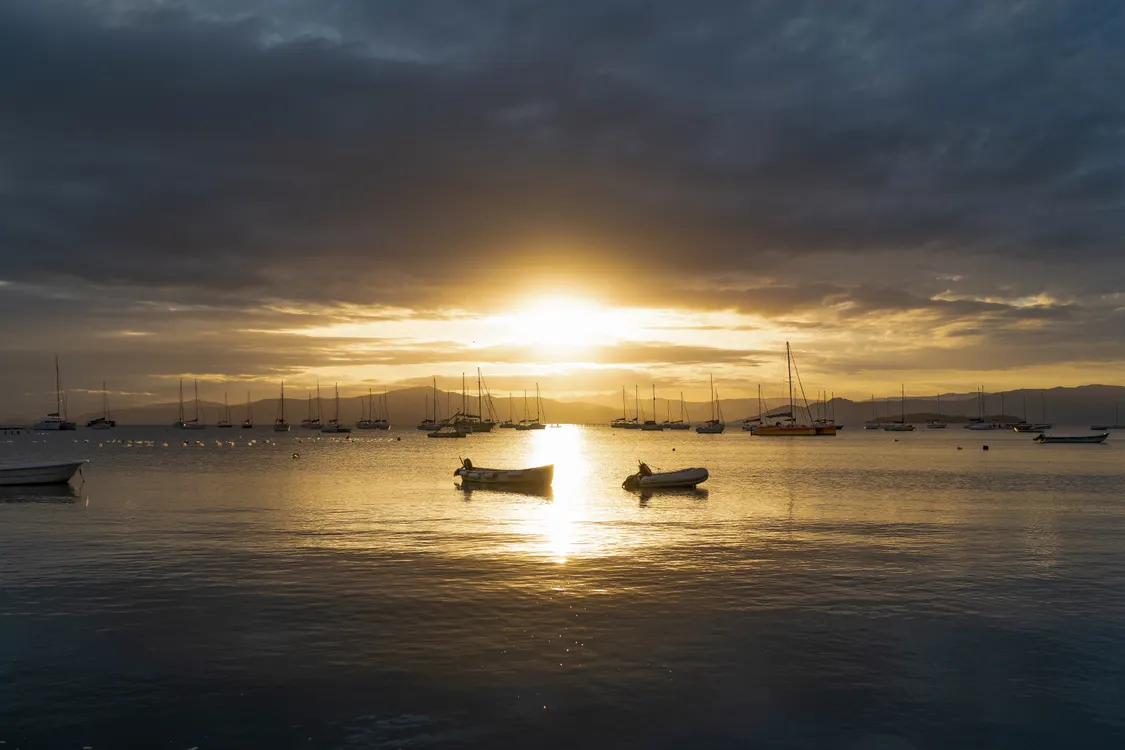
Lahaina Harbor Breakwall
30 minutes before sunset
Capture the sunset behind the silhouette of Lanai across the Auau Channel. Position your camera to align the incoming boats and harbor breakwall with the golden hues of the water.

Sunset along Lahaina's western shore follows a predictable rhythm shaped by the Pacific horizon and West Maui's latitude. The exact moment the sun drops below the ocean shifts by nearly ninety minutes between solstices, and knowing the daily schedule helps you position yourself along Front Street before the light peaks. This guide maps the seasonal pattern and explains how to time your arrival.
Quick answer
Lahaina sunset time ranges from approximately 5:50 PM in late December to 7:15 PM in late June, with the sun setting directly over the Pacific horizon year-round. The golden hour window begins 30 to 45 minutes before the official sunset moment, and the entire spectacle—from the first amber glow to the final dip below the waterline—lasts roughly 20 minutes. Summer sunsets arrive later and offer extended twilight, while winter sunsets compress the viewing window into a shorter, more concentrated display.
Lahaina sits at 20.8783° North latitude, a geographic position that delivers the sun to the western horizon every evening with minimal atmospheric obstruction. The Pacific Ocean stretches unbroken for thousands of miles beyond the coastline, creating a clean sightline that eliminates the haze common to inland or urbanized sunset locations. This combination of low latitude and open water produces vivid color saturation during the final descent, when refracted light passes through the atmosphere at a shallow angle. The daily lahaina sunset time shifts in a sine wave pattern tied to Earth's axial tilt. At the winter solstice in late December, the sun sets around 5:50 PM, marking the earliest moment of the year. By mid-March, the daily schedule has moved past 6:20 PM, and the summer solstice in late June pushes the event to its latest point near 7:15 PM. The fall equinox in September returns the clock to the 6:30 PM range before the cycle completes. The rate of change accelerates near the equinoxes, when the sunset moment shifts by one to two minutes per day, and slows near the solstices, when the daily variation flattens to thirty seconds or less. Front Street occupies a north-south corridor parallel to the ocean, with unobstructed western exposure across its entire historic length. The waterfront's public access areas remain open from 8:00 AM to 6:00 PM daily, a window that brackets the golden hour for most of the year but cuts off before the latest summer sunsets. The restriction reflects community safety protocols established during Lahaina's rebuilding period, and visitors planning to witness the full descent should verify the current access schedule through the official recovery coordination site at mauirecovers.org. The golden hour—the 30 to 45 minutes before the sun touches the horizon—delivers the warmest tones and the longest shadows, and photographers favor this pre-sunset window over the final plunge. Cloud cover along the western horizon amplifies the color range by scattering light into layered bands of orange, magenta, and violet, while a cloudless sky produces a cleaner but more subdued palette. Trade winds typically soften in the late afternoon, reducing whitecaps and creating a glassier ocean surface that mirrors the sky's gradient. The entire visible descent, from the moment the sun's lower edge contacts the water to its disappearance, occupies 18 to 22 minutes depending on atmospheric refraction. Seasonal tourism patterns concentrate the largest crowds between December and April, when the earlier lahaina sunset time aligns with the dinner hour and draws visitors directly from nearby restaurants and shops. Summer months see lighter foot traffic despite the extended daylight, as the later schedule pushes the event past typical dining windows. The public access curfew at 6:00 PM creates a natural break point that influences when and where sunset viewing occurs, and many visitors now position themselves along alternative coastal vantage points south of the historic core to capture the full event without time constraints.
“Lahaina's unobstructed Pacific sightline and low latitude combine to produce one of the cleanest sunset horizons in the Hawaiian Islands.”
The optimal window for viewing the Lahaina sunset is during the shoulder months of April and October, when the ocean horizon remains mostly clear of heavy seasonal clouds. During these months, the sun sets between 18:10 and 18:45, providing clear views.
Warm, highs around 88°F, lows 70°F
Sunset occurs late, typically between 19:04 and 19:11. Clear skies are common, though early evening trade winds can pick up along the water.
Mild, highs near 82°F, lows 64°F
The sun dips below the horizon earliest now, between 17:50 and 18:05. This coincides with the peak of the humpback whale migration season, adding activity to the ocean views.
Moderate, highs near 85°F, lows 68°F
Sunset ranges from 18:10 to 18:45, providing balanced daylight hours. Cloud cover is typically minimal, allowing for clear views as the sun drops behind Lanai.
Verdict: Tuesday or Wednesday, arriving before 18:00, April or October.
The historic district is open daily from morning through early evening, with public access permitted during daytime hours.
The historic Front Street area of Lahaina is situated on Maui's western coast, accessible primarily via the coastal Honoapiʻilani Highway. Visitors can reach this shoreline stretch by rental vehicle, regional bus, or on foot from adjacent resort areas.
Hawaii Route 30 (Honoapiʻilani Highway) to Front Street
Maui Bus Route 20 (Lahaina Islander) to Lahaina
Rideshare from Kaanapali to Front Street
Walking south from Lahaina Cannery Mall along Front Street
For community safety, public access to the historic district is restricted to the best arrival window of 08:00–18:00. Drivers should utilize designated public parking lots on the periphery of Front Street to keep emergency lanes clear.
Viewing the sunset from the public areas of Lahaina's historic district is entirely free, distinguishing public shoreline access from paid private cruise options.
Verdict: A typical visitor pays 0 USD to watch the sunset from the shore, and expenses only change if booking a commercial boat tour.
30 minutes before sunset
Capture the sunset behind the silhouette of Lanai across the Auau Channel. Position your camera to align the incoming boats and harbor breakwall with the golden hues of the water.
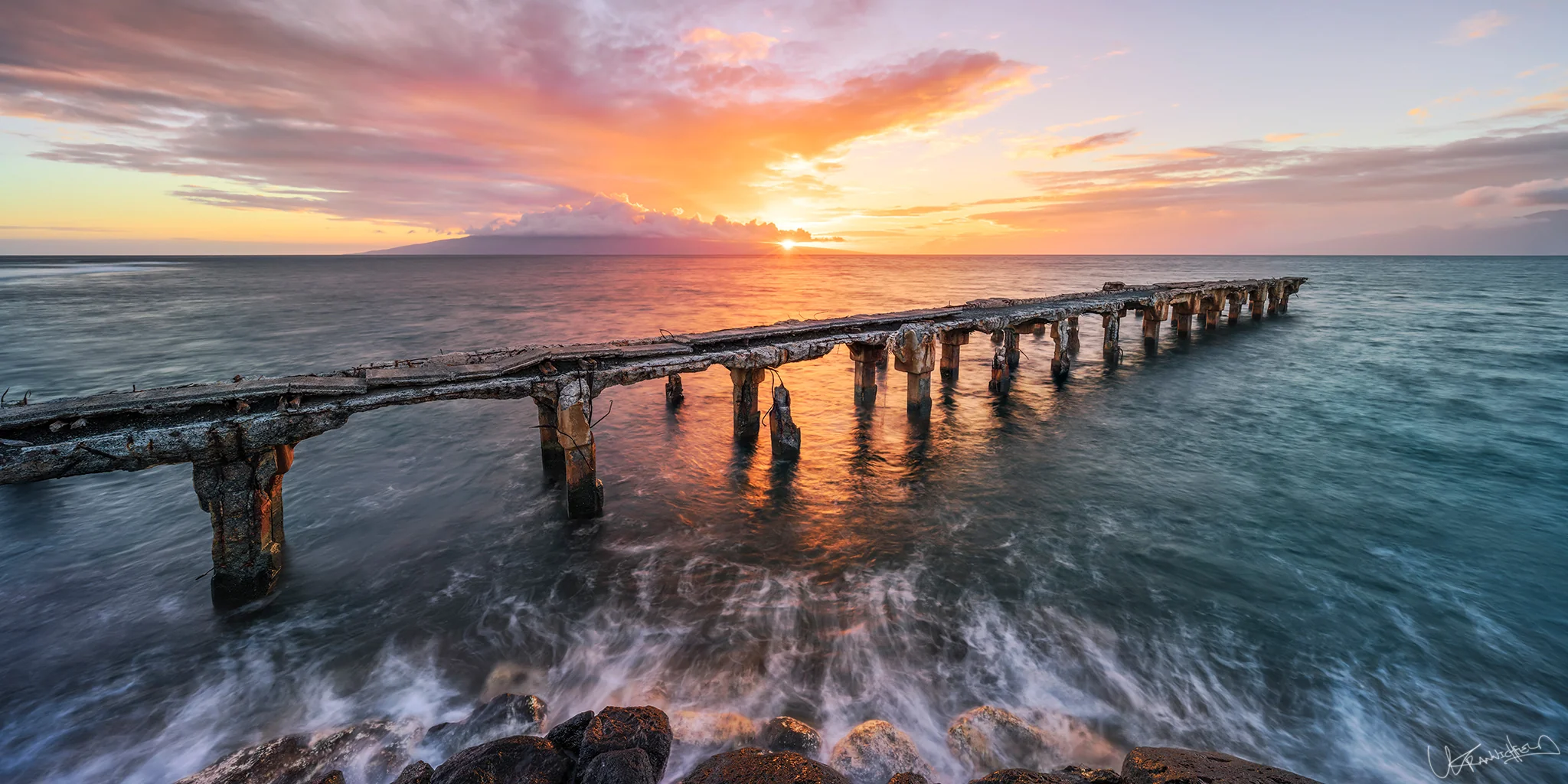
20 minutes before sunset
Shoot from the shoreline looking through the concrete pillars of the abandoned pier for a symmetrical, framed view of the fading light. Long exposure shots here help smooth the waves and capture the reflections beneath the structure.
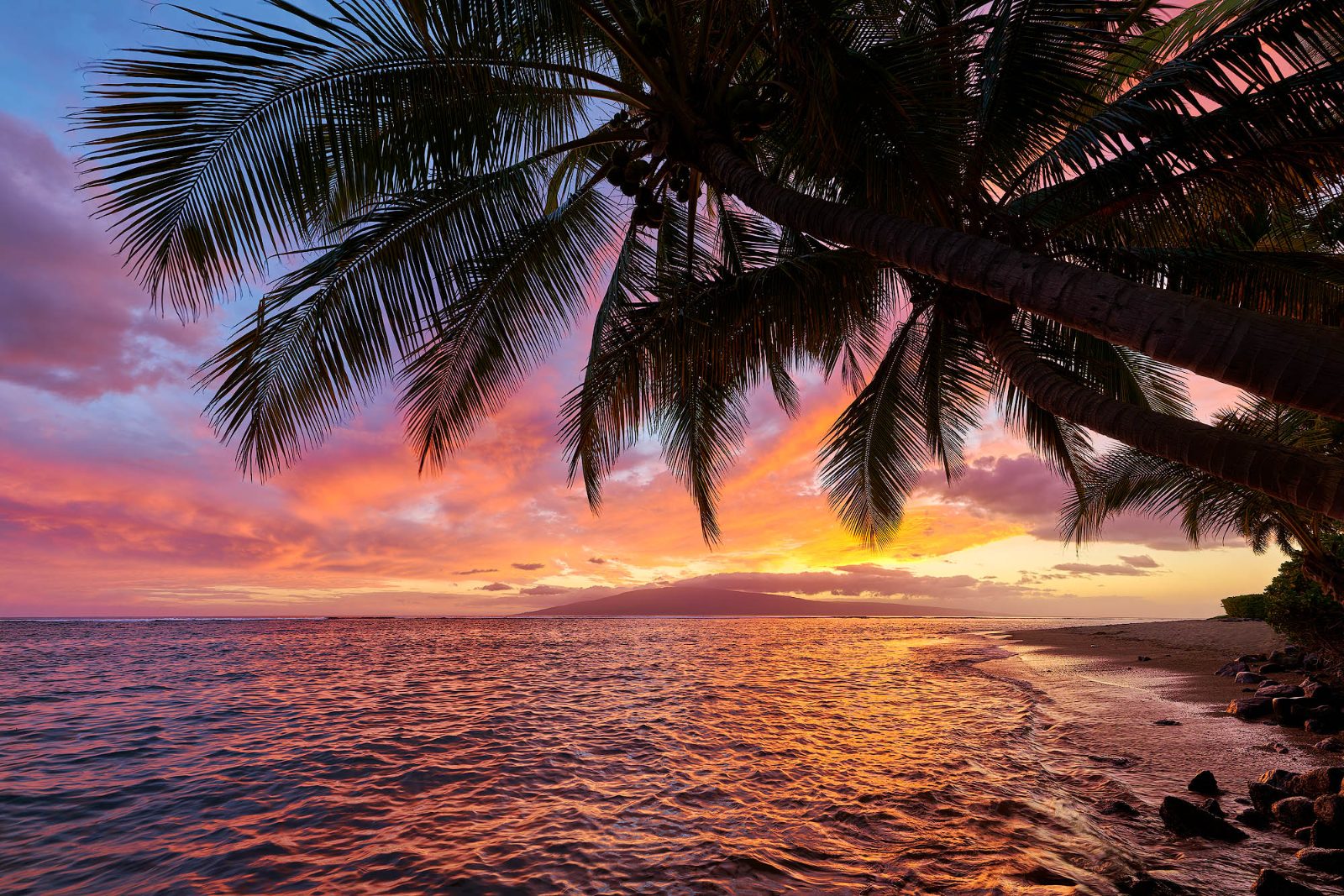
Golden hour
Take advantage of the calm, reef-protected waters to capture glassy reflections of the sunset sky. Frame the shoreline palm trees against the silhouettes of neighboring islands.
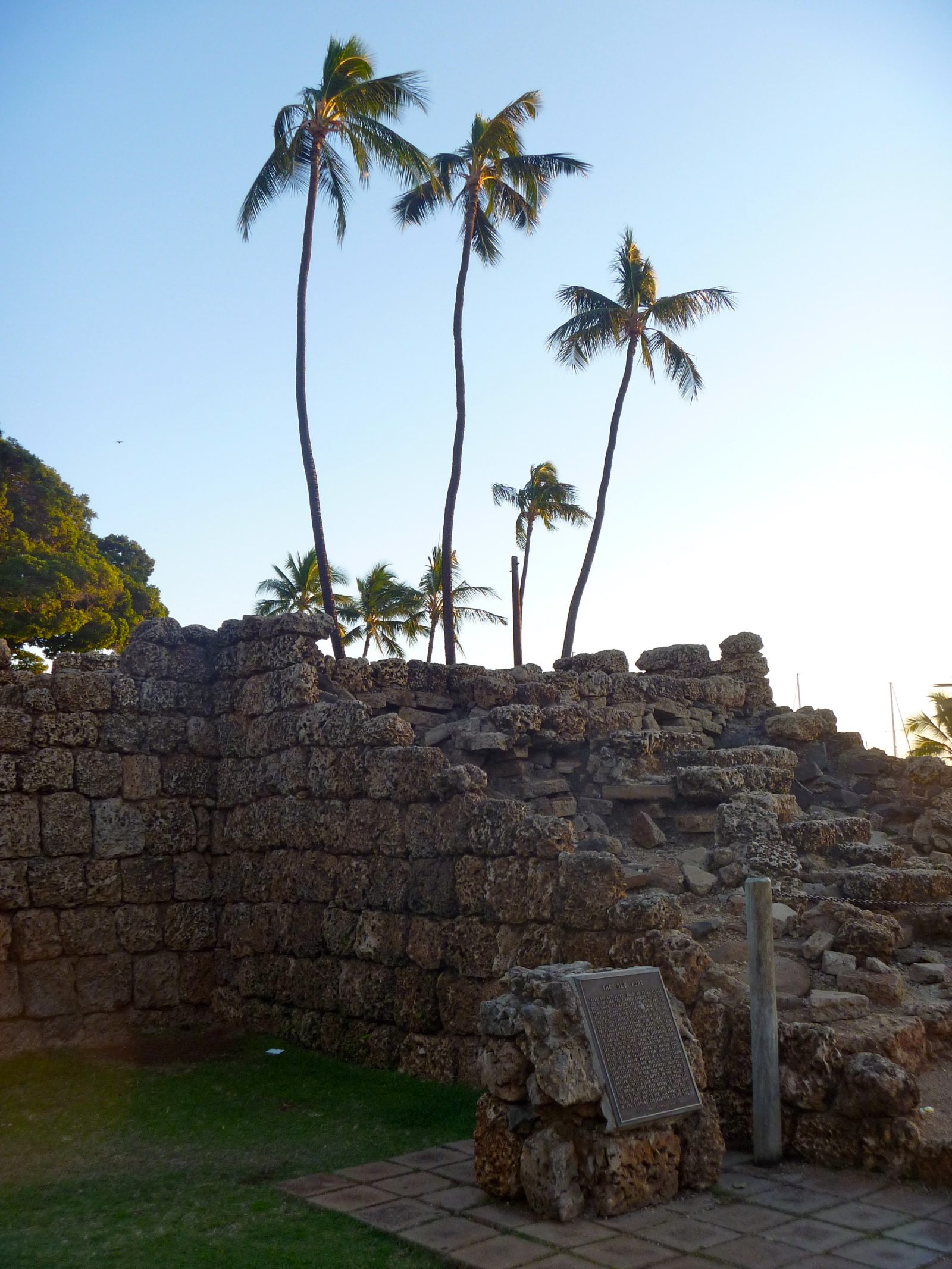
15 minutes before sunset
Position your camera behind the historic coral-and-sand walls of the fort to contrast the ancient stone textures with the twilight colors of the channel. The elevation provides a clean vantage point looking out toward the ocean.
Everything you need to know about lahaina sunset time
In August, the lahaina sunset time generally occurs between 7:00 PM and 7:15 PM. Because the district closes by 6:00 PM, visitors should plan to view the horizon from nearby coastal areas or aboard a vessel.
You may certainly observe the golden hour light from public coastal locations, though you must respect the restricted access to the historic district after hours. Many visitors choose a Lahaina harbor cruise to enjoy the shift in daylight from the water.
There is 0 USD entrance fee to visit the historic district during operating hours. Access to public streets remains free, but you should verify private venue policies if you choose to watch the sun dip below the horizon from a specific facility.
The best arrival window is 08:00–18:00 to align with community safety guidelines. Planning your visit for a lahaina sunset time requires finding a vantage point outside the district before the 6:00 PM closing time.
Families are welcome to explore the area, but the historic district closes at 6:00 PM daily. It is advisable to coordinate your lahaina sunset time plans with an evening boat excursion that departs from the harbor.
The most common error is assuming the historic district remains open for late-night viewing. Visitors often forget that local access to the district is restricted to daytime hours, so scheduling a sunset sail is a practical way to manage your evening itinerary.